19/07/2013
17/07/2013
16/07/2013
Surprise du jour * Surprise of the day
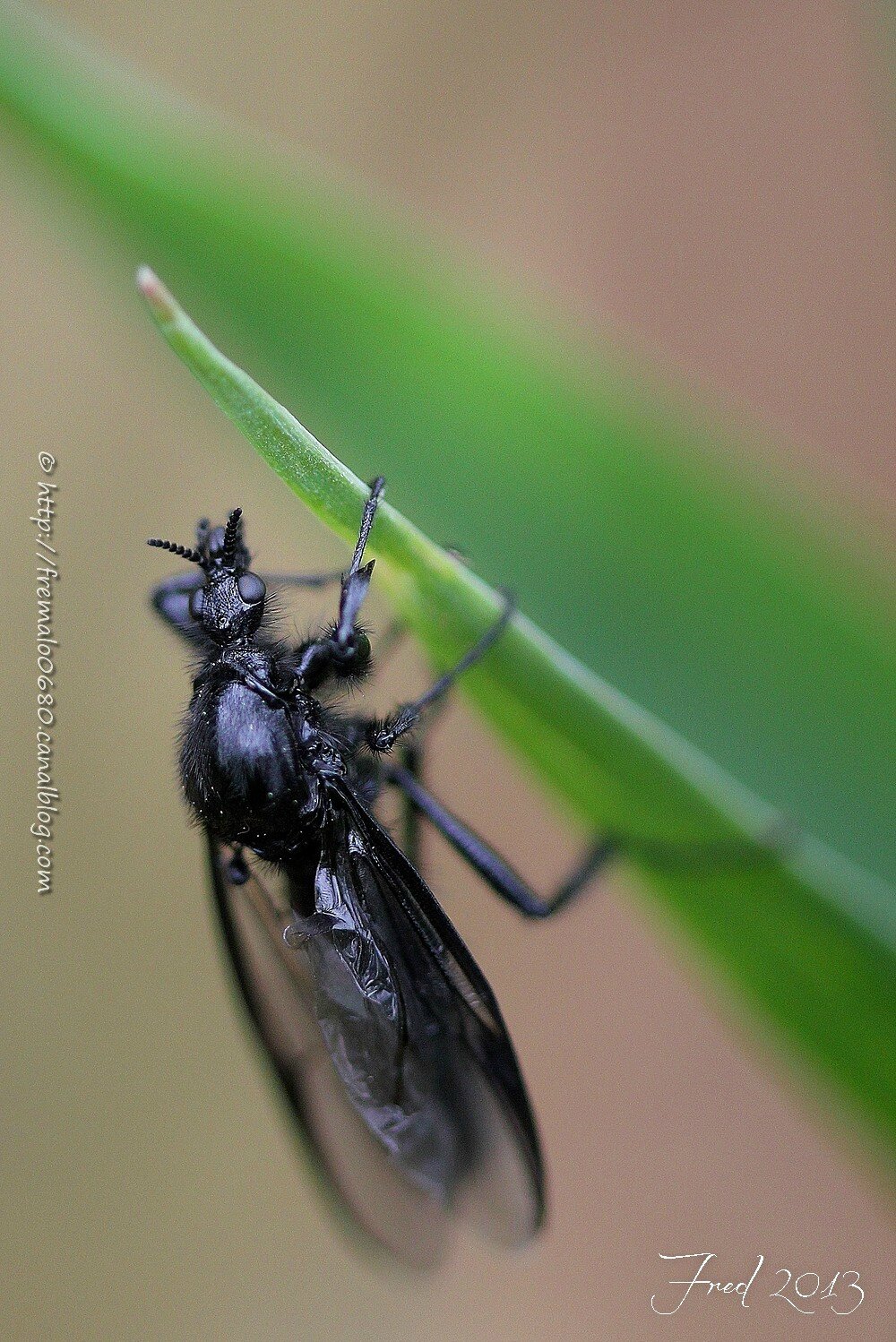
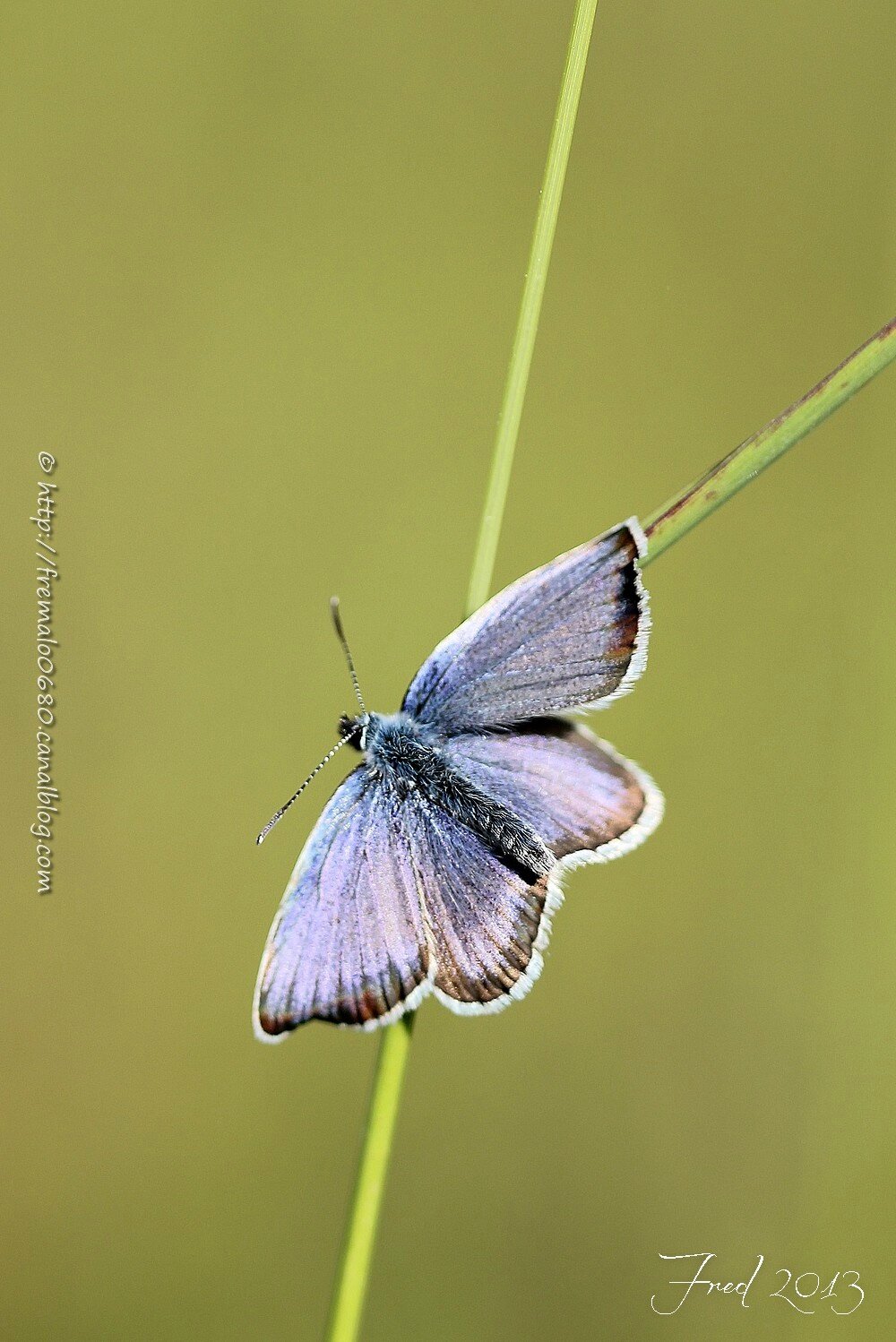
Je savais depuis longtemps qu'il y en avait en Lorraine. Mais jusqu'à ce matin j'avais fait chou blanc. Mais voilà c'est fait j'en ai trouvé !!
Une rencontre fortuite, mais dont j'ai réussi à profiter avant de me faire attaquer par une bande de fourmis furieuses du fait que je piétinais leur fourmilière. J'ai dû capituler et me sauver ailleurs mais maintenant que je sais où il y en a je pourrai y retourner en faisant attention aux endroits où je mettrai mes pieds ;)
I knew for a long time that there was in Lorraine. Till this morning I had failed in finding them. But I made it! I found them!
A fortuitous meeting, but of which I managed to take advantage before making me attack by a band of furious ants because I trampled their ant-hill. I had to capitulate and rush somewhere else but now that I know where they are, I can return there paying attention on the places where I shall put my feet ;)
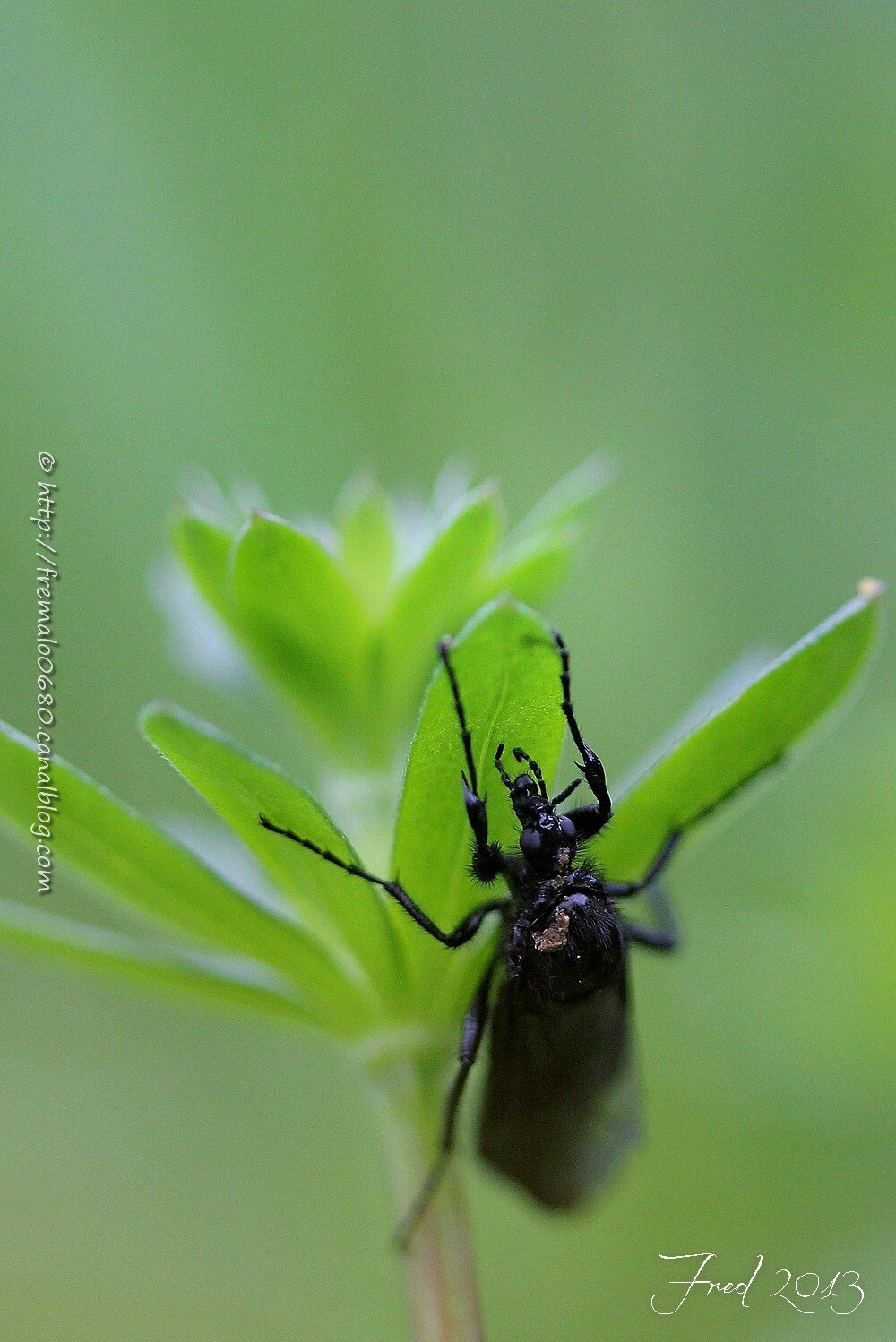
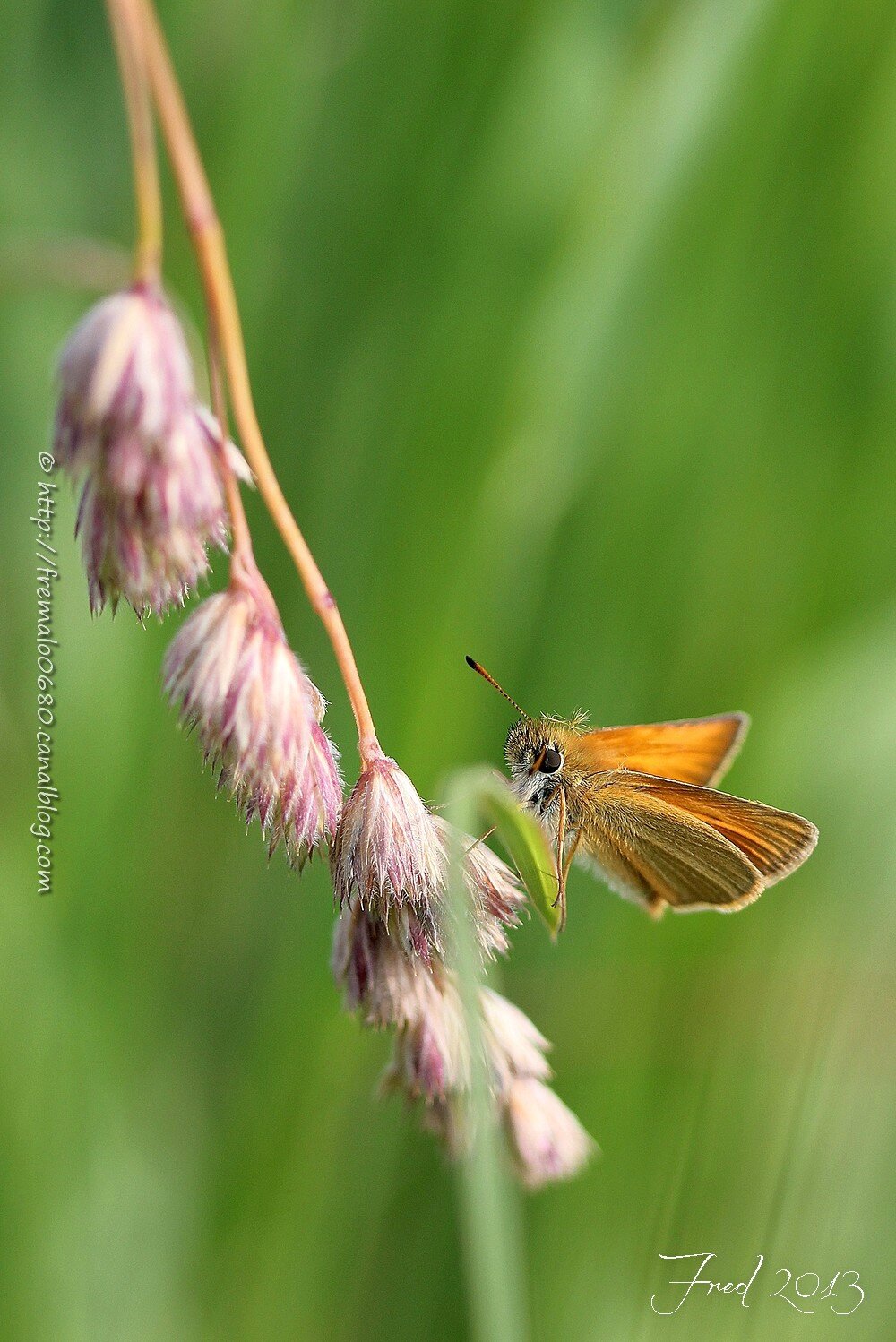
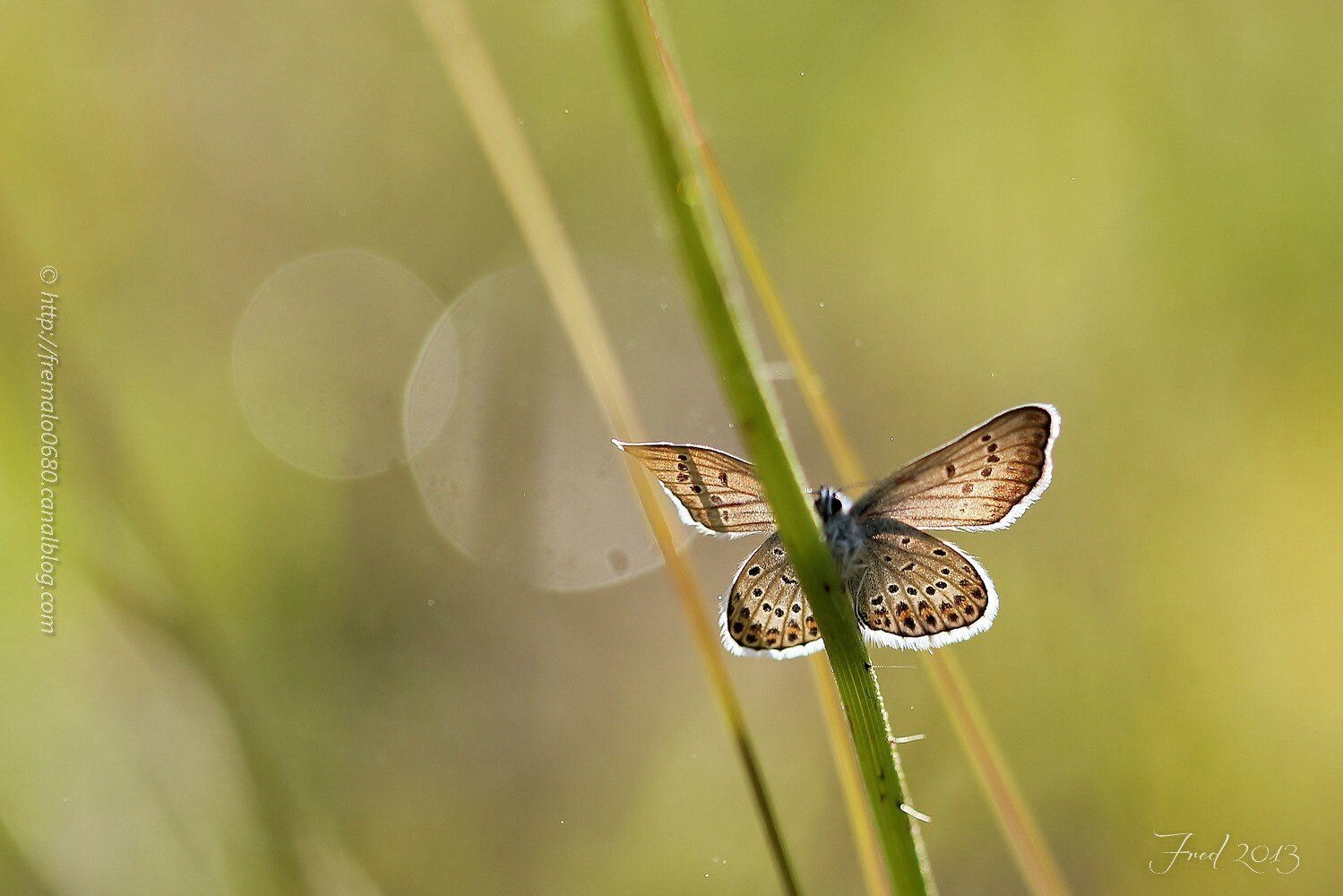
Voici donc mes premières zygènes lorraines.
Here are my firt two burnets of Lorraine
Il est possible qu'en plus j'en aie trouvé deux espèces différentes. Si on regarde bien, la zygène du fond a les taches 1 et 2 séparées, les t3 et t4 légèrement confluentes, n'a pas de t6 et ses antennes semblent moins coudées que celles de la zygène au premier plan. Pour celle ci on remarque que t1 et t2 sont confluentes de même que t5 et t6.
L'identification des zygènes se fait par le patron des taches, la couleurs de celles ci et des ailes, la forme et la couleur des antennes, des pattes et bien d'autres détails ... Une identification très très compliquée ce qui fait que mes deux premières zygènes resteront sous le nom
It is possible that I found two different species. If we look, the burnet of the bottom has spots 1 and 2 separated, spot 3 and 4 slightly confluentes, does not have of t6 and its antennas seem less angled than those of the zygène in the foreground. For this one we notice that t1 and t2 are confluentes, as well as t5 and t6.
The identification of zygènes is made by the boss of spots, color of these and wings, shape and color of antennas, legs and the good(property) of the other details... A very very complicated identification what makes that my two first burnets will stay under the name Zygaena sp
Une clé d'identification des zygènes disponible en français ...
An identificaton key for burnet in english
Meurthe et Moselle, juillet 2013
14/07/2013
Mère porteuse * Mothering
Mère porteuse, le jeu de mots passe très bien en français mais pas en anglais ...
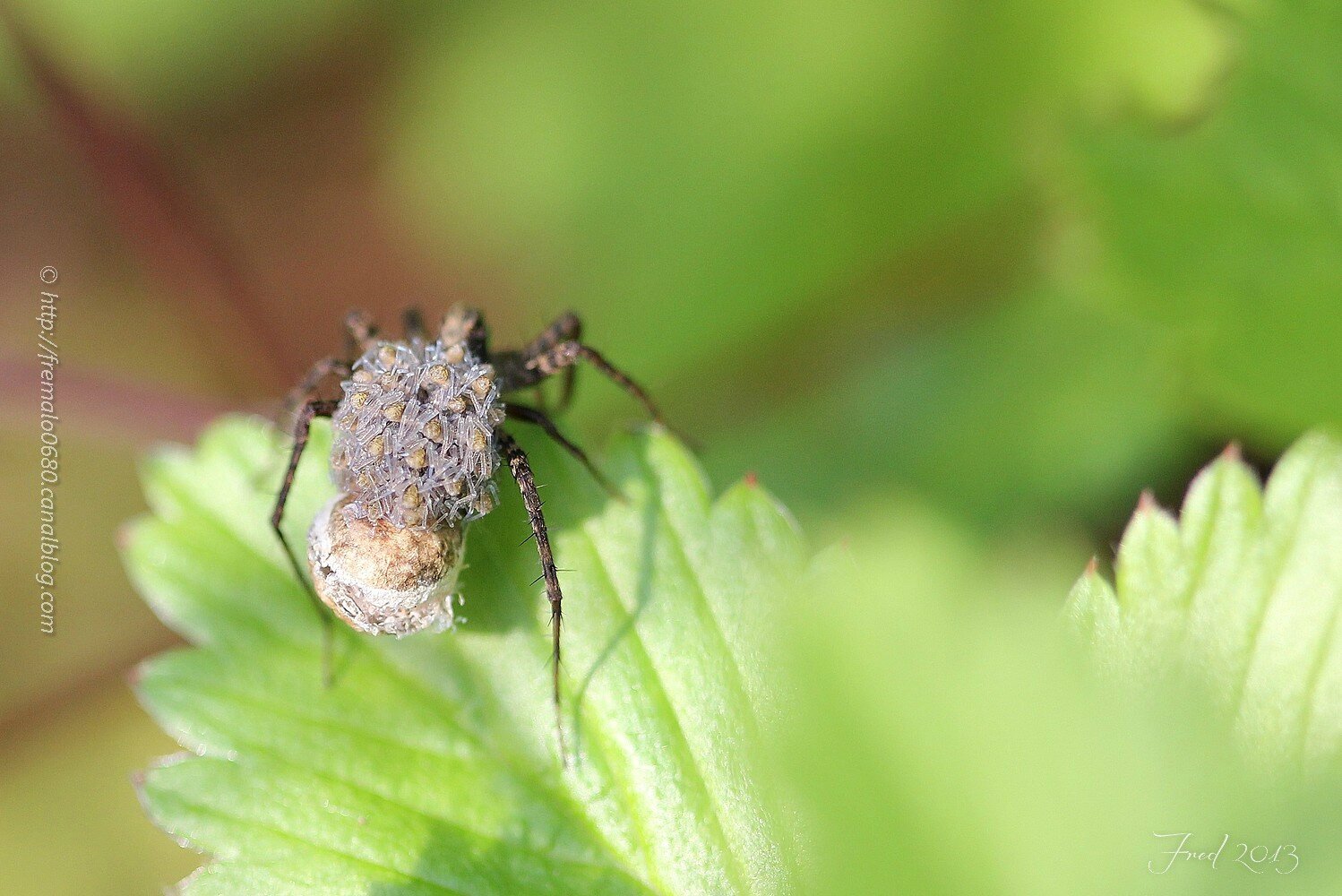
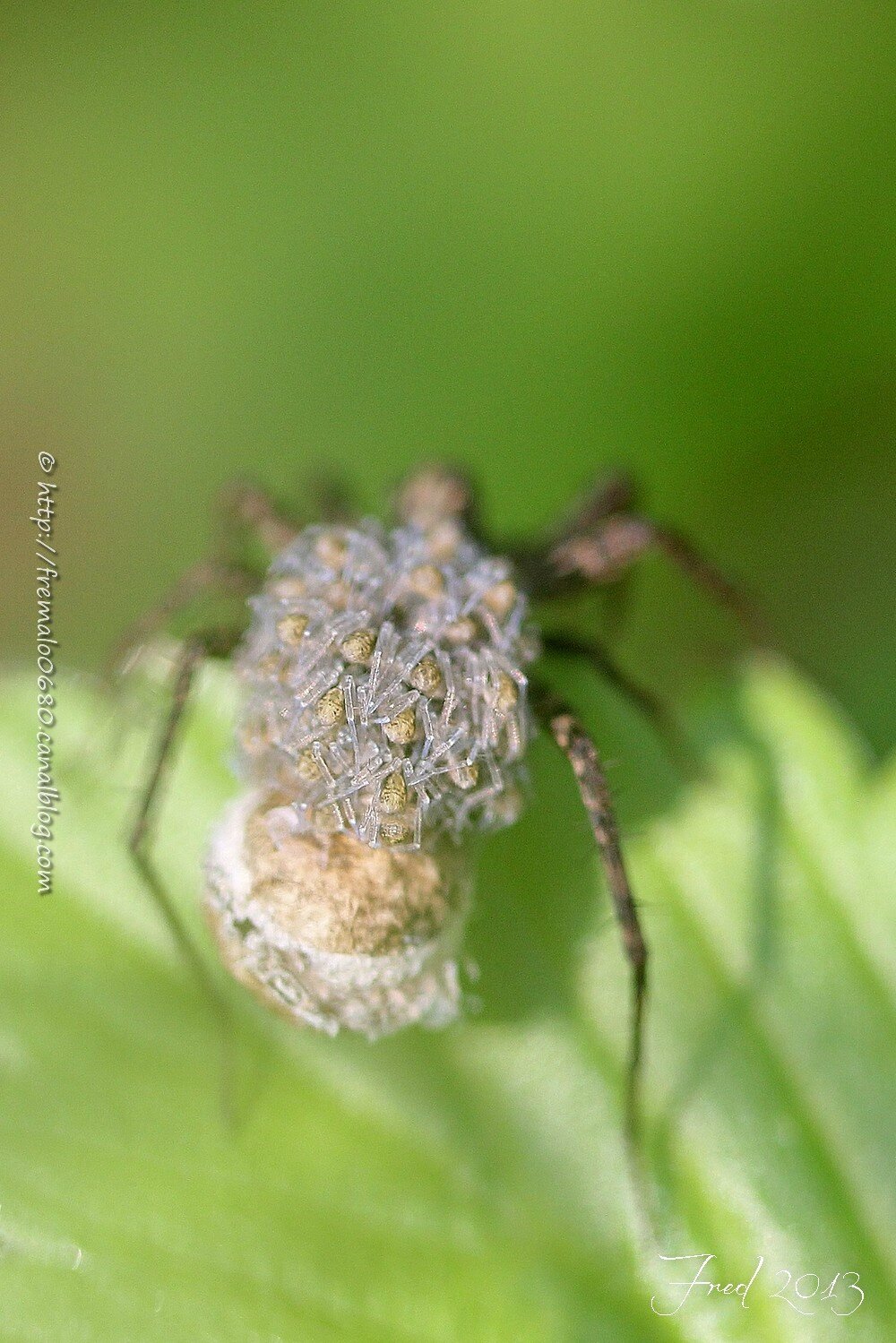
Les araignées loup, ici visiblement une Pardosa sp, transportent leurs cocon mais aussi leurs bébés ...
The french title is surrogate mother, a pun not understable in english so, the english title is mothering because those spider really are good mother.
Wolf spiders, here apparently Pardosa sp, transport their cocoon but also their babies...
A l'arrière, on aperçoit le reste du cocon que la femelle accroche à ses filières pour le promener, l'exposer au soleil et ainsi assurer sa protection.
In the back, we perceive the rest of the cocoon which the female hangs on on its spinnerets to walk it, expose it to the sun and so assure its protection.
De la même façon, elle transporte sur son dos ses bébés pendant leurs premiers jours de vie libre. Ainsi elle leur assure une protection fort appréciable.
In the same way, she transports her babies on her back during their first days of free life. So she assures them a very considerable protection.
Meurthe et Moselle, juillet 2013
13/07/2013
Aromatique * Aromatic
La sauge des prés (Salvia pratensis) est non seulement une jolie fleur mais, également une plante aromatique fort appréciée.
The Meadow clary (Salvia pratensis) is not only an attractive flower but, also a hardly appreciated aromatic plant.
En plus de relever nos plats, d'agrémenter les champs de ses jolies couleurs c'est aussi une plante médicinale. Bref un vrai trésor de la Nature.
Besides being aromatic, decorating the fields of its attractive colors it is also a medicinal plant. In fact it's a real treasure of the Nature.
Meurthe et Moselle, juin 2013
10/07/2013
Treillis * Pattern
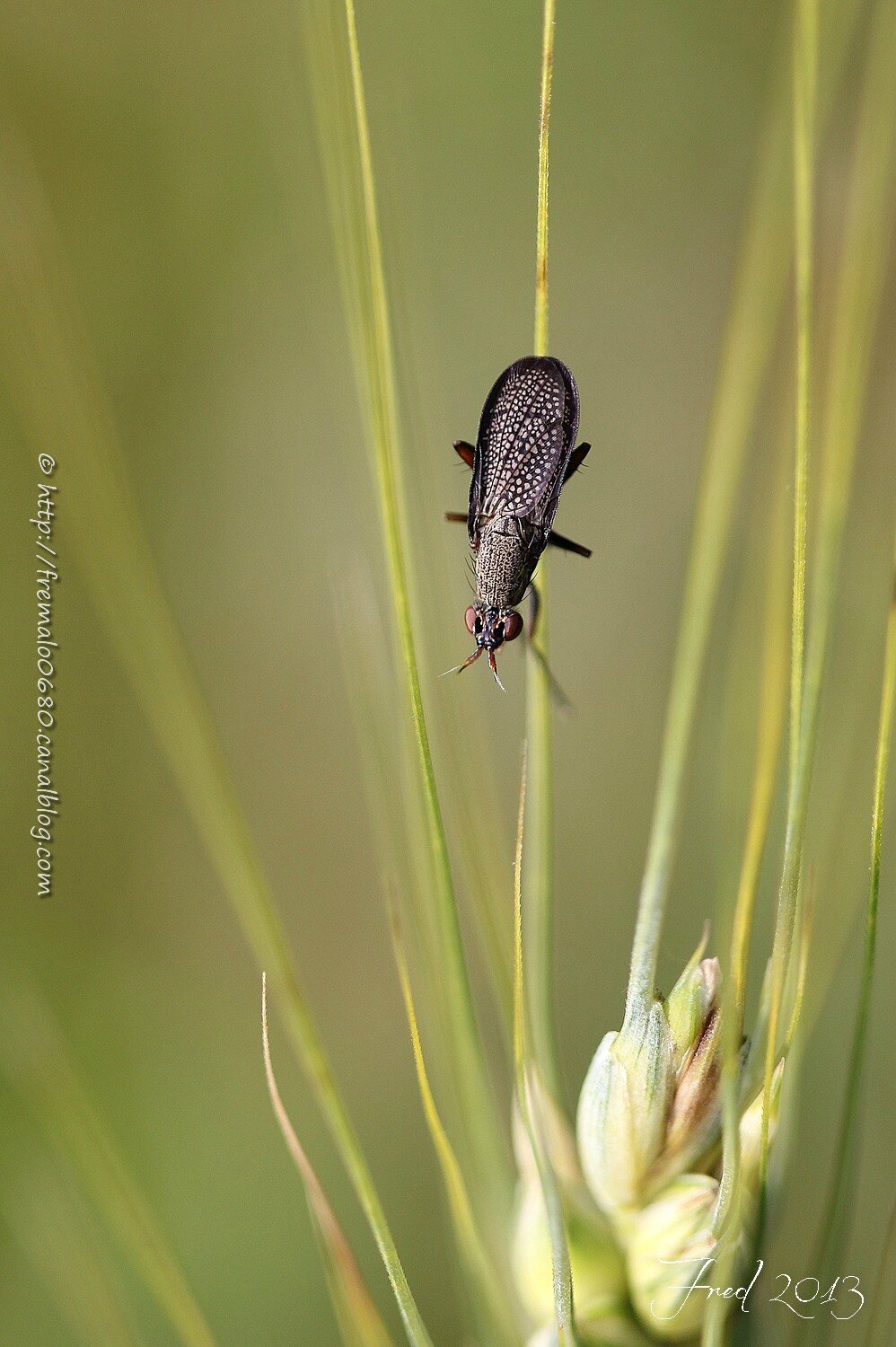
Les Sciomyzidae sont de bien jolies petites mouches qui, comme bien d'autres, se nourrissent de nectar et de pollen. Mais, leur intérêt réside dans le fait que, leurs larves, se nourrissent d'escargots voir de limaces !!
Voici certainement, avec ses ailes en treillis, l'un des Sciomyzidae les plus reconnaissable: Coremacera marginata
Sciomyzidae are very nice little flies which, as many others, feed on nectar and on pollen. But, their interest lies in the fact that, their larvas, feed on snails and even of slugs!!
Here is certainly, with its patterned wings, one of Sciomyzidae the most recognizable: Coremacera marginata the snail-killing fly.
Meurthe et Moselle, juillet 2013
09/07/2013
08/07/2013
L'empêcheur de tourner en rond * The killjoy
Lors de nos promenades il nous arrive de tomber sur ce chien. Un vrai trouble fête, un empêcheur de tourner en rond... Toujours seul, jamais en laisse, pour sa sécurité je suis obligée de rattacher les miens et de poser mon appareil photo (en tout cas de surveiller et donc de ne plus penser aux petites bêtes)
During our walks we fall on this dog sometimes. A real party pooper, a killjoy ... Always alone, never in leash, for its security, I have to put mine on leash to put my camera down (in any case to watch and thus not to think any more of the insects and flowers)
Meurthe et Moselle, avril 2013
07/07/2013
Inscription à :
Articles (Atom)