Affichage des articles dont le libellé est Poaceae. Afficher tous les articles
15/08/2021
26/11/2020
10/05/2019
23/09/2015
07/07/2015
25/11/2014
18/11/2014
24/09/2013
13/09/2013
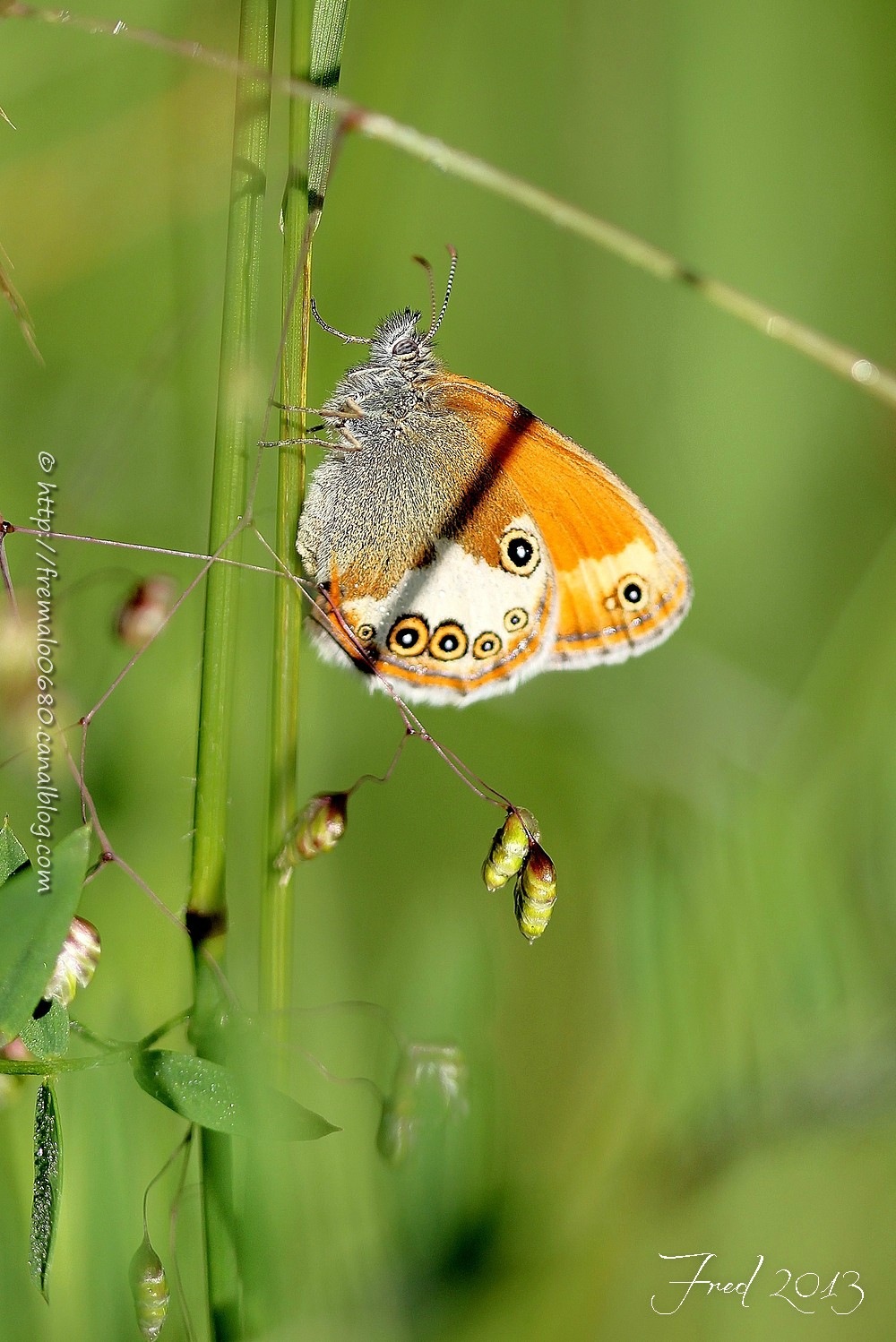
D'ombre rayé * Of shadow lined
Le Céphale (Coenonympha arcania), posé sur un brin de Brize (Briza sp), ne me laissa pas ce jour là le temps de faire un autre cliché.
J'aurai pu corriger cette ombre en post traitement ... J'aurai pu mais, cela ne m'intéresse pas. Mes photos d'insectes ne sont, pour la plupart, jamais retouchée. Un brin d'herbe gêne?? Alors il en sera ainsi car Dame Nature en a décidé ainsi.
The pearly heath (Coenonympha arcania), put on a stalk of quaking grasses (Briza sp), did not give me this day the time to make another picture.
I'll have been able to correct this shadow in post-treatment... I'll have been able to but, it does not interest me. My photos of insects are never retouched, for the greater part. A blade of grass bothers?? Then it'll be so because Mother Nature decided so.
Meurthe et Moselle, juin 2013
22/07/2013
Amateur d'orge * Amateur of barley
Le lema à tarses noirs (Oulema melanopus), considéré comme ravageur par les agriculteurs, est un petit coléoptère de la famille des Chrysomelidae. Ce dernier, aussi appelé criocère de l'orge, ne dédaigne pas les autres céréales.
The cereal leaf beetle (Oulema melanopus), considered as devastating by the farmers, is a small beetle of the family of Chrysomelidae. The latter, is called cereal leaf beetle because it likes barley but does not disdain the other cereal.
Il semblerait que les criocères apprécient les printemps frais et pluvieux avec levée tardive des céréales ... cela explique sans doute que cette année j'en ai vu beaucoup. C'est ainsi, que j'ai vu dans le même champ d'orge, son cousin noir, le lema du lichen (Oulema gallaeciana).
It would seem that cereal leaf beetle appreciates fresh and rainy springs with late levying of cereal. It doubtless explains that this year I saw it a lot. So, I saw in the same field of barley, its black cousin Oulema gallaeciana.
Et, plus loin, un accouplement de ce que je prenais de prime abord pour des criocères de l'orge mais qui en fait (la tête étant plus noires et élytres plus ponctués) semblent bien être des Oulema duftschmidi.
And, farther, a mating of what I took at first sight for Oulema melanopus but which seems (the head being more black and more punctuated elytrons) to be Oulema duftschmidi.
Mais pas facile de différencier Oulema melanopus et duftschmidi sans dissection ... donc on reste pour ces deux rouges et noirs à Oulema sp ;)
But it's not easy to differentiate Oulema melanopus and duftschmidi without dissection ... thus we stay for these two red and black in Oulema sp;)
Meurthe et Moselle, mai 2013
15/07/2013
28/06/2013
Poaceae
J'adore le latin ;)
Avant on les appelait Graminées ... aujourd'hui Poacés ou, en latin, Poaceae. Ce nom a été choisi sur la base du Genre Poa ...
C'est une famille très riche et pas toujours simple à identifier. Si vous voulez vous essayer voici une clé d'identification spécifique aux Graminées
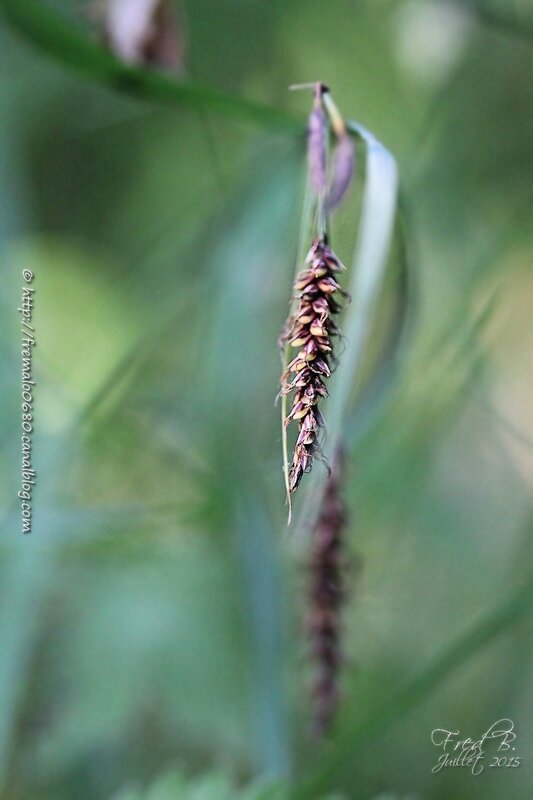
Aujourd'hui c'est un Carex qui m'inspire ... Carex qui restera Carex sp car malheureusement je n'ai pas essayé de faire d'autres clichés pour pouvoir avoir du matériel pour l'identifier.
I adore the Latin;)
Before we called them Gramineae today, Poaceae. This name was chosen on the basis of the Genus Poa...
It is a family very rich and not always simple to identify. If you want to venture there, here is a key of specific identification on true grasses
Today it's a Carex which inspires me... Carex who will remain Carex sp because unfortunately I didn't try to make other pictures to be able to have of the material to identify it.
It is a family very rich and not always simple to identify. If you want to venture there, here is a key of specific identification on true grasses
Today it's a Carex which inspires me... Carex who will remain Carex sp because unfortunately I didn't try to make other pictures to be able to have of the material to identify it.
Meurthe et Moselle, juin 2013
Inscription à :
Articles (Atom)